I did not start this project by saying, “I want to build software.” I started with a simpler problem: a good consultation should not disappear when the call ends.
I wanted someone to be able to bring their Human Design chart, talk through what was actually happening in their life, and leave with something deeper than scattered notes. I wanted the reading to connect the chart to money behavior, decision-making, business structure, conditioning and practical next steps.
That sounds like a document problem. It wasn't. It was a systems problem.
The moment the idea changed
The first version of the idea was basically: upload a chart, ask AI to read it, get a report. That would have been easy to understand — and too generic to matter.
The real value was in the translation layer: the chart is one source of information, the private conversation is another, and the final Blueprint should preserve the relationship between the two.
I wasn’t just building a report. I was building a translation system.
Once I saw it that way, the architecture became clearer. The tool needed a private operator interface. It needed to accept a chart PDF. It needed session notes. It needed structured output. It needed to save every Blueprint to a CRM so I could reopen the client later instead of regenerating their history from zero.
Then the system started fighting back
The build did not work cleanly on the first try. Airtable authenticated, then failed because the field names did not match the code. The AI request ran, then the serverless environment killed it because the generation took too long without sending data. The browser caught the failure and originally reduced it to a useless message: “unreadable response.”
Each failure exposed a different layer of the system.
Authentication errors forced the CRM structure to become explicit. Field mismatches forced the data model to become explicit. Timeouts forced the generation architecture to become explicit. Better error messages made the system operable instead of mysterious.
Building through failure
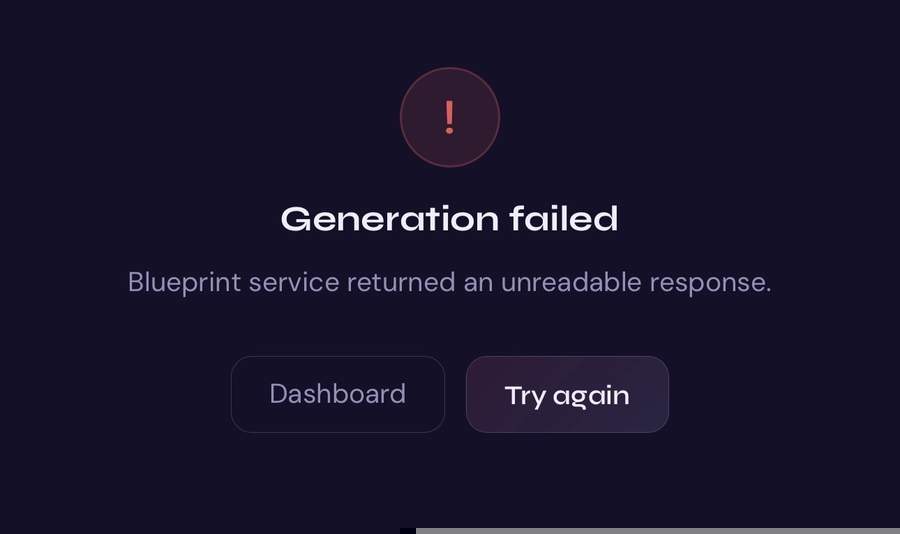
The final fix was not “make the AI faster.” It was to change the request into a streamed generation path so the connection stayed alive while the Blueprint was being built.
That is the kind of thing I keep noticing in systems: the visible problem is often not the actual problem.
What the finished Blueprint reflected back to me
When the first complete Blueprint finally generated, the interesting part was not that the technology worked. The output described me as a system builder.
That landed differently because I had just spent hours doing exactly that: finding disconnected pieces, defining what each piece should do, moving secrets out of the browser, connecting AI to a server function, connecting the result to Airtable, creating payment, then connecting payment to scheduling.
I realized I have a recurring instinct: I see a process, notice where context gets lost, and immediately start asking why the pieces are not connected.
Why should a client pay and then wonder what happens next? Why should a consultation end and lose the context that made it valuable? Why should someone enter the same information twice? Why should an error hide the layer that actually failed?
Those questions are becoming the center of NEXUS X.
What the output actually looks like
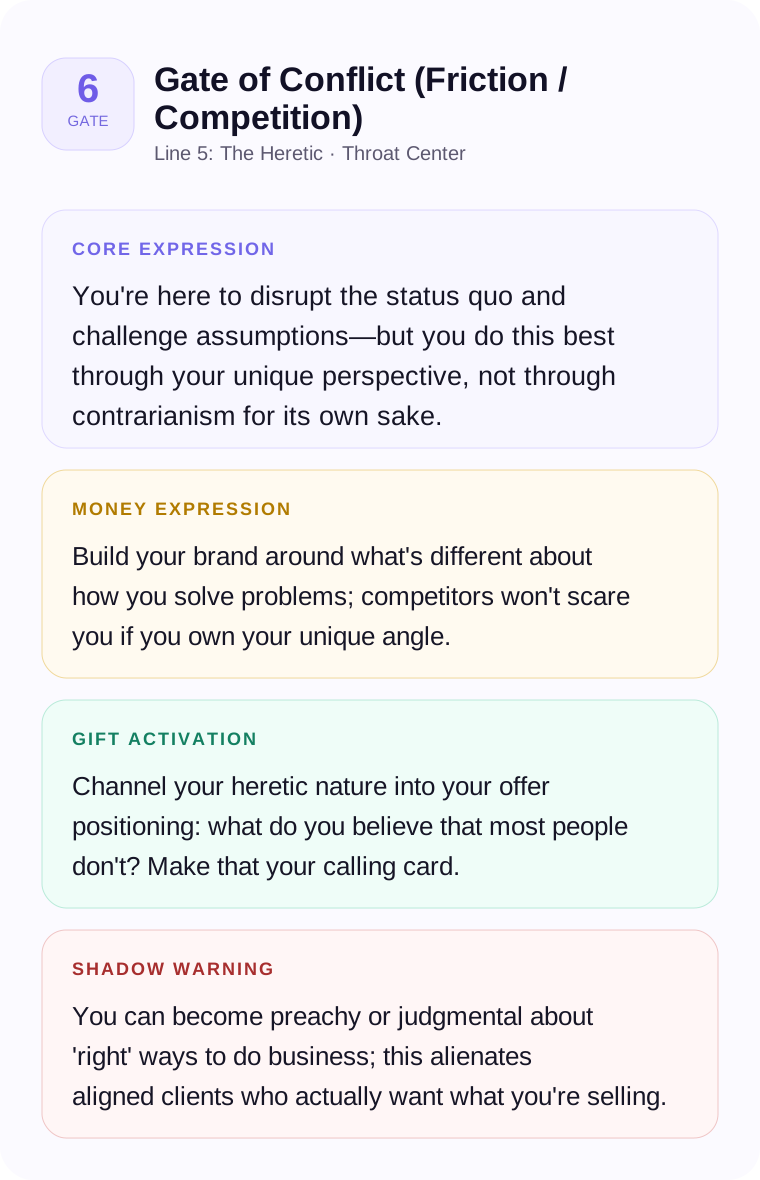
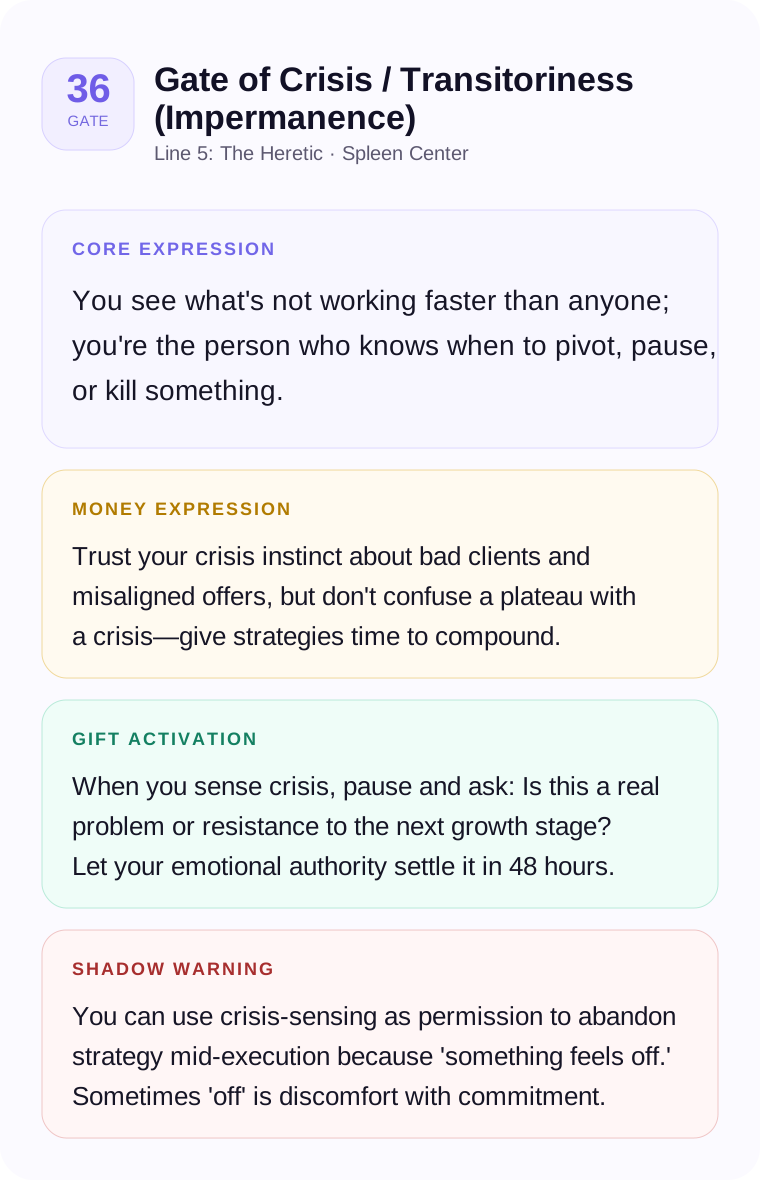
The finished Blueprint does not stop at a type/profile label. It translates specific Human Design mechanics into business, money and decision-language, then surfaces both the useful expression and the shadow pattern to watch.

The product is not the technology
The AI is useful. Airtable is useful. Stripe is useful. Scheduling is useful. None of those tools are the product by themselves.
The product is the experience created by how they are connected.
For the Wealth Blueprint, the public flow is now:
Learn about the Blueprint → choose the Clarity Call or Full Blueprint → pay securely → schedule the private session → bring chart + context → receive a personalized Blueprint → preserve it in the CRM for future continuity.
That is the difference between collecting tools and building a system.
What I'm testing next
The next question is persistence. If a client comes back six months later, should the system merely reopen their old Blueprint — or should it understand how their decisions, money patterns and business questions have changed since the first session?
I am also thinking about how much of the system should remain private. The public-facing experience should feel simple. The complicated orchestration belongs behind the curtain.
That may be one of the clearest design principles I have learned from this build: complexity should be absorbed by the system, not transferred to the person using it.